How Mountain View Was Built: What Did Your Neighbors Actually Pay?
How decades of evolution shaped today's neighborhoods and why Mountain View's story matters for your next move.

Timothy Alston | Broker
Aegis Luxury Real Estate · DRE# 01328224
Published
July 30, 2026
Silicon Valley's Premier Address
As of July 2026, Mountain View's average sale price reached $2.03M with homes closing at 103.4% of asking price in 24 days on market. Inventory currently stands at 102 active listings across Mountain View.
Mountain View Market Snapshot, October 2026
Live MLSSale price vs last year
Days on market vs last year
Inventory vs last year
Information is deemed reliable but is not guaranteed. Full Mountain View market data →
73
Market Action Score
Strong Seller's Market
“ The history of a place tells you what it values. Mountain View valued curiosity before it valued real estate, and that's still what makes the dirt here worth more than the gold ever was.
Timothy Alston | Broker, Aegis Luxury Real Estate
See all 102 active listings in Mountain View
Updated every 15 minutes from MLS
806 Emily DR
Mountain View, CA 94043
Homes Mountain View CA carry a layered history that stretches back to the mid-1800s, when the peninsula was first mapped, settled, and transformed by the forces of westward migration. Understanding that timeline is not merely an exercise in nostalgia. It is a practical lens that helps today's buyers and sellers read the city more clearly and make decisions with deeper confidence.
How the Gold Rush Era Planted the Roots of Mountain View CA
Before Mountain View became the technology corridor that the world recognizes today, it was a waystation. Forty-niners moving north and south along the El Camino Real corridor in the 1850s created the first commercial demand for shelter, provisions, and community gathering points. That original commercial spine still shapes how streets are organized, how neighborhoods cluster, and why certain pockets of the city feel distinctly more walkable than others.
Homes in Mountain View are moving at an average pace of 24 days on market. With 49 new listings hitting the market recently, timing remains a critical factor for both buyers and sellers.
The township of Mountain View was formally incorporated in 1902, but its bones were already well established by then. Early settlers staked out agricultural parcels across what are now zip codes 94040, 94041, and 94043. Orchards dominated the flatlands, and the seasonal rhythms of planting and harvest defined neighborhood boundaries long before any developer drew a subdivision map. What does that mean for someone considering a home here today? It means the land itself has memory, and that memory shapes value in ways that a simple square footage calculation cannot capture.
Consider what it means to own property where families have anchored themselves across multiple generations of California transformation. Does that kind of continuity matter to you as a buyer? If it does, then understanding which neighborhoods carry the deepest roots becomes a meaningful part of your search, not just a background detail.
The Railroad Era and the First Wave of Neighborhood Formation
The arrival of the Southern Pacific Railroad in 1864 was perhaps the single most consequential event in Mountain View's early real estate history. Rail access did not simply speed up travel. It reorganized the entire logic of land use. Parcels near the depot became commercially valuable almost overnight. Residential blocks began forming at walkable distances from the station, and the grid pattern that still anchors the Old Mountain View neighborhood today took its essential shape during this period.
Old Mountain View, centered around Castro Street, represents one of the clearest living records of that railroad-era development pattern. The relatively tight lot sizes, the mix of Victorian and Craftsman architectural influences, and the pedestrian-oriented street design all trace directly back to the practical necessities of a community built around foot traffic to and from the platform. If you walk those blocks today, you are walking through a planning logic that is more than 150 years old.
For buyers drawn to that neighborhood, one honest question worth sitting with is this: what specifically appeals to you about the older building stock and the walkable grid? Is it the architecture, the community character, the proximity to downtown amenities, or something harder to name? Clarifying that for yourself before you search tends to produce better outcomes than chasing a general sense of charm without understanding its source.
1925
Kingsport Plunge opens as a saltwater swimming pool and amusement park attached to the failed port project. For a brief window the North Bayshore hosts weekend crowds from across Santa Clara Valley before the Depression shuts the operation down.
2016
Voters approve a rent control ordinance, one of the most aggressive in Santa Clara County. It marks the moment the city formally acknowledges that its tech wages and its historic housing stock are permanently mismatched.
1852
Mountain View is founded as a stagecoach stop on the El Camino Real, named for its unobstructed view of the Santa Cruz Mountains. The land that becomes the city is open valley floor, oak-studded grasslands, and farmland operated by Spanish-Mexican land grant families.
Active in Mountain View Right Now
3 of 95 active listings · refreshed every 15 minutesMountain View, CA 94043
Mountain View, CA 94043
Mountain View, CA 94040
Agricultural Legacy and the Transition Decades That Homes Mountain View CA Still Reflect
The decades between the 1880s and the 1940s were a period of gradual but irreversible transition. The Santa Clara Valley was still earning its older nickname as the Valley of Heart's Delight during those years, and Mountain View sat squarely within that orchard economy. Apricot, cherry, and prune trees covered land that would later become residential subdivisions. The loamy soil and gentle topography that made the valley so productive agriculturally also made it well-suited to the suburban development wave that followed World War II.
That postwar expansion introduced an entirely different architectural vocabulary to the city. Ranch-style homes, modest in footprint but generous in lot size by today's standards, began filling in the flatlands south of the rail line through the late 1940s and into the 1960s. Neighborhoods like Cuesta Park and Waverly Park took their essential character from this era. The homes built then were designed for a specific postwar vision of California life: outdoor living, attached garages, and single-story floor plans that aged gracefully as families grew.
Here is a question worth considering if you are evaluating homes from that era today. What would it mean for your daily life if the lot size and single-story layout that felt spacious in 1955 now needs to accommodate a home office, multi-generational living, or a significant renovation? That is not a discouraging thought. It is an invitation to assess honestly whether the original design serves your actual needs or whether the appeal is primarily aesthetic. Both are legitimate starting points. They simply lead to different decisions.
The Technology Era and Its Permanent Imprint on Mountain View Real Estate
The arrival of research institutions and eventually the technology industry reshaped Mountain View more profoundly than any previous era, and it did so with remarkable speed. By the 1970s, the agricultural economy had given way to aerospace and electronics. By the 1990s, the city had become one of the most strategically located addresses in Silicon Valley. That sequence of economic transformations compounded land values in ways that were not predictable from the ground level at any single moment during the transition.
What the technology era produced, from a real estate perspective, was a city with unusual density of competing values. Historic bungalows from the 1920s sit within blocks of mid-century ranch homes and contemporary infill construction. No single architectural era dominates, and that variety creates a search environment where the right home for one buyer is entirely wrong for another, even within the same zip code.
Schools in Mountain View draw consistent attention from buyers with children. It is worth noting that school attendance boundaries change, and buyers must verify enrollment eligibility for any specific address directly with the Mountain View school district. Contacting the district before assuming a particular home falls within a desired boundary is a practical step that protects buyers from making decisions based on outdated information.
Castro City
Small historic enclave across from Rengstorff Park, originally the 1908 University Park subdivision with Stanford-inspired street names like Leland and College. Evolved into a predominantly Latino working-class neighborhood by mid-century, and La Plaza Market still anchors the block where the old Castro City Market once operated.
Monta Loma
West-side Eichler and mid-century ranch enclave on the site of the historic Castro Shell Mound, an Ohlone heritage site that Stanford professors first studied in 1893. Deep residential character, tree-canopied streets, and some of the best-preserved original Eichler blocks left in Mountain View.
Sylvan Park
Peaceful and walkable central enclave with 1960s and 1970s single-story ranch homes, many updated over the last two cycles. Anchored by Sylvan Park itself and within easy reach of downtown Castro Street and Caltrain, which explains why tenure tends to run longer than the Mountain View average.
Consider This
What would it feel like to walk from your Mountain View home to farmers markets, parks, and restaurants?
Want to talk through your Mountain View options? 15-minute strategy call, no obligation.
Schedule a Call →If you are buying a Mountain View condo, compare HOA reserve studies across buildings. Well-funded reserves prevent surprise special assessments.
Reading the Timeline as a Buyer or Seller in Today's Market
Every era of Mountain View's development left a different physical and financial signature on the housing stock. Knowing which era built a particular home tells you something meaningful about its likely renovation history, its structural characteristics, and the neighborhood patterns that surround it. A railroad-era Victorian in Old Mountain View, a postwar ranch in Waverly Park, and a 1980s townhome near downtown are not simply different ages of construction. They represent entirely different relationships to land, to community, and to long-term value.
For sellers, this historical layering raises a useful question. Do you know which version of Mountain View's story your home tells? Buyers who understand the city's timeline will read your property differently depending on its era, and a seller who can articulate that context confidently tends to attract more thoughtful, committed buyers. The narrative a home carries is part of its value, not separate from it.
For buyers, the same awareness works in reverse. If you are drawn to homes mountain view ca without a clear sense of which historical chapter appeals to you, you may find yourself comparing properties that are not genuinely comparable. A clearer picture of what you value, whether that is the walkable grid of the railroad era, the generous lots of the postwar decades, or the newer construction of the technology boom, sharpens your search considerably and reduces the kind of lingering uncertainty that slows decisions without improving them.
Why Historical Awareness Strengthens Your Real Estate Position
There is a practical case for this kind of historical grounding that goes beyond intellectual interest. Markets in cities with layered histories tend to reward buyers and sellers who understand what they are actually transacting. A home in a neighborhood with deep residential continuity carries different risk and different upside than a home in a recently rezoned corridor, even if the listed prices are similar on a given day.
Mountain View's multiple development eras also mean that no single part of the city tells the whole story. The explore more about Mountain View real estate on this site covers specific neighborhood profiles in more detail, but the broader point is that context always matters. The California Association of Realtors housing research provides statewide data that can help frame local conditions within a larger picture.
If you have been searching for homes mountain view ca and finding that the options feel harder to compare than you expected, that difficulty often has a historical explanation. The city was not built in a single era with a consistent vision. It grew in waves, each one responding to a different set of economic and social forces. Understanding those waves does not complicate your search. It clarifies it. And clarity, in a market as competitive and consequential as this one, is one of the most valuable things you can bring to the table.
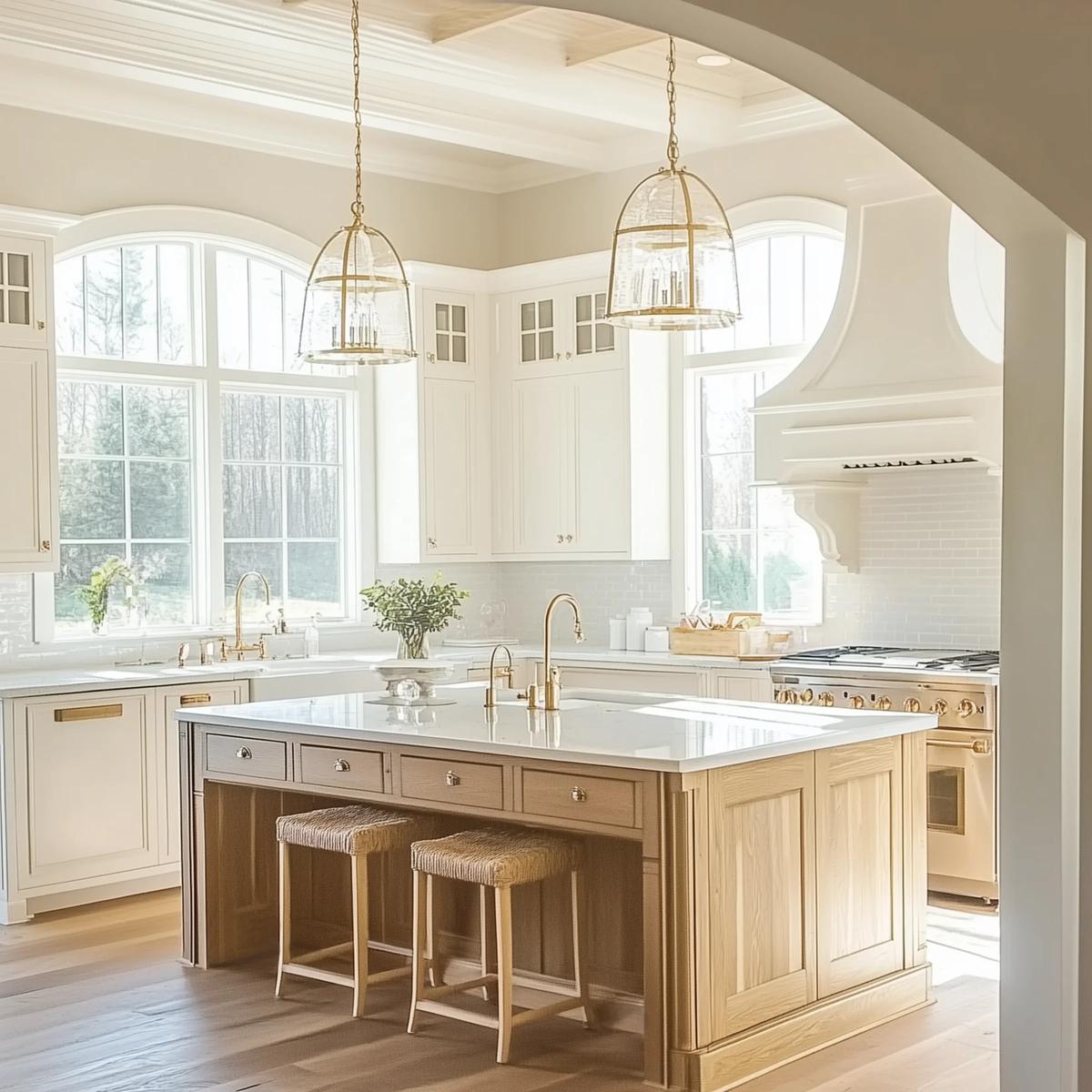

Browse Mountain View Real Estate
Live counts · refreshed every 15 minutes from MLS
Get the Complete Mountain View Market Report
Monthly data, neighborhood breakdowns, price trends, and insider analysis delivered to your inbox.
Send Me the Report →Buyers traveling in summer should set up automated alerts and keep their agent authorized to schedule tours quickly. Hot listings don't wait for you to get back from vacation.
Mountain View Market FAQ
Mountain View has shown strong long-term appreciation fueled by sustained tech industry growth, transit infrastructure, and limited housing supply. Its position at the center of Silicon Valley supports both rental demand and property value growth.
Mountain View sellers benefit from deep buyer demand, but proper preparation is still essential. Clean, staged homes with modern updates and proximity to transit or downtown command the strongest prices.
Mountain View is one of the more walkable cities in the South Bay, particularly around Castro Street, the San Antonio Shopping Center area, and near transit stations. Neighborhoods like Old Mountain View and Cuesta Park offer excellent walkability scores.
Still have questions about Mountain View?
I've helped hundreds of families buy and sell in Mountain View. Happy to share what I'm seeing in your specific neighborhood.
What's Your Mountain View Home Worth Right Now?
Get a confidential home valuation based on current MLS data and neighborhood-specific factors.
Get My Home Value →Schools in Mountain View
Aegis School Excellence Index · 2024-25 performance data
Serving districts: Mountain View Whisman SD (K-8), Mountain View-Los Altos Union High SD (9-12). School district boundaries can change; please verify current enrollment boundaries and program offerings directly with the school district.
Looking for homes in Mountain View?
Get personalized listing alerts delivered to your inbox. Be the first to know about new homes that match your criteria.
Get Mountain View Listing Alerts →Community Resources
Mountain View Essential Services
Official Sources
Buying or Selling in Mountain View?
Get the data, the strategy, and the introductions before the rest of the market sees them.
Schedule a Conversation →
Timothy Alston
Broker · DRE# 01328224 · Aegis Luxury Real Estate
Copyright © 2026 MLSListings Inc. All rights reserved.
The data relating to real estate for sale on this display comes in part from the Internet Data Exchange program of the MLSListings™ MLS system. Real estate listings held by brokerage firms other than Aegis Luxury Real Estate are marked with the Internet Data Exchange icon and detailed information about them includes the names of the listing brokers and listing agents.
Based on information from the MLSListings MLS as of July 2026. All data, including all measurements and calculations of area, is obtained from various sources and has not been, and will not be, verified by broker or MLS. All information should be independently reviewed and verified for accuracy.
These statistics are generated using information from the MLSListings Inc. multiple listing service, but have not been verified and are not guaranteed. MLSListings Inc. disclaims any responsibility for the accuracy and reliability of these statistics. Full Mountain View market data →
Data updated every 15 minutes. Visit www.MLSListings.com for more information.
Aegis Luxury Real Estate · 10080 N. Wolfe Rd Ste SW3-200, Cupertino CA 95014 · DRE# 01328224
This article is for informational purposes only and does not constitute financial, legal, or tax advice. Equal Housing Opportunity.