Buy Home Santa Clara | What Do the Numbers Actually Say?
How decades of evolution shaped today's neighborhoods and why Santa Clara's story matters for your next move.

Timothy Alston | Broker
Aegis Luxury Real Estate · DRE# 01328224
Published
July 31, 2026
The Mission City
As of July 2026, Santa Clara's average sale price reached $1.67M with homes closing at 103.8% of asking price in 25 days on market. Inventory currently stands at 117 active listings across Santa Clara.
Santa Clara Market Snapshot, September 2026
Live MLSSale price vs last year
Days on market vs last year
Inventory vs last year
Information is deemed reliable but is not guaranteed. Full Santa Clara market data →
73
Market Action Score
Strong Seller's Market
“ The history of a place tells you what it values. Santa Clara valued curiosity before it valued real estate, and that's still what makes the dirt here worth more than the gold ever was.
Timothy Alston | Broker, Aegis Luxury Real Estate
See all 117 active listings in Santa Clara
Updated every 15 minutes from MLS
3786 Dunford WAY
Santa Clara, CA 95051
Buy Home Santa Clara Through the Lens of History
When you decide to buy home Santa Clara, you are not simply entering a real estate transaction. You are planting roots in one of the most historically consequential cities in California, a place whose land was shaped by mission settlements, Spanish land grants, the Gold Rush economy, and Silicon Valley's rise. Understanding that layered past helps you ask smarter questions before you sign anything.
Santa Clara's story begins long before semiconductors and venture capital. The Mission Santa Clara de Asis, established in 1777, was one of the earliest permanent settlements in what is now the South Bay. The mission system organized the land into ranchero grants, and those early boundaries influenced the street patterns, parcel lines, and civic corridors that buyers still navigate today. History is not merely a backdrop here. It is embedded in the grid.
Right now in Santa Clara, the average sale price sits at $1,668,348, with homes moving in an average of 25 days. There are currently 117 active listings on the market.
When the Gold Rush arrived after 1848, the Santa Clara Valley became a provisioning hub rather than a mining camp. Farmers, merchants, and tradespeople recognized that proximity to San Francisco and the coastal passes made the valley strategically valuable. Orchards replaced cattle ranges. The fruit industry that defined the valley for nearly a century drew wave after wave of settlers who understood that productive land compounds in value across generations.
The Old Orchard Districts and What They Became
The neighborhoods now known as Rivermark and the areas surrounding the 95054 zip code once sat beneath rows of prune, cherry, and apricot trees. Canneries and packing sheds populated the flatlands where technology campuses now stand. If you have ever wondered why certain Santa Clara streets seem unusually wide or why parcels near the waterfront feel generously proportioned, the agricultural economy explains it. Growers needed room to move equipment and harvest.
That spatial generosity carried into the mid-twentieth century as aerospace and electronics firms acquired orchard land for their campuses. What those early land buyers understood intuitively, that location advantage rarely disappears, still holds in the current market. The buyers who move confidently in Santa Clara today are the ones who recognize that advantage rather than waiting for perfect conditions that may never arrive.
Think about what it would mean if that waiting cost you a year or more of equity building. That is not a rhetorical point. It is a practical consequence worth sitting with before you decide that timing conditions need to align perfectly before you act.
1857
Santa Clara College conferred its first Bachelor of Arts degree on Thomas I. Bergin, the first diploma from any institution of higher learning in California
1855
Santa Clara College received its formal charter of incorporation from the State of California, solidifying its status as the state's first college
1822
The Adobe Lodge was constructed on the Mission Santa Clara grounds, becoming what is today the oldest surviving building on the Santa Clara University campus
Active in Santa Clara Right Now
3 of 161 active listings · refreshed every 15 minutesSanta Clara, CA 95051
Santa Clara, CA 95050
Santa Clara, CA 95050
Mission City Infrastructure and the Roots of Stability
Santa Clara earned the nickname Mission City for reasons that extend beyond sentiment. The civic institutions that grew from the mission era, churches, schools in Santa Clara, civic halls, and community gathering spaces, created a social fabric that attracted stable, long-term residents rather than transient populations. Buyers who want to understand why certain Santa Clara corridors hold value through market cycles should consider that stability as a structural feature, not a marketing phrase.
It is worth asking yourself what stability actually means to you in a home purchase. Is it about the neighbors who stay? The civic investment that keeps streets and parks maintained? The school quality that families protect through advocacy? Schools in Santa Clara carry a strong collective reputation, and buyers interested in specific enrollment options should verify attendance boundaries and eligibility directly with the Santa Clara Unified School District, since boundaries shift and no address carries an automatic guarantee. The district is the only authoritative source for that information.
By the late nineteenth century, the University of Santa Clara (now Santa Clara University) had established itself as the valley's academic anchor. Institutions like that do not simply provide education. They generate a surrounding economy of housing demand, retail, and professional services that insulates nearby property values from the sharper swings experienced in less institutionally anchored markets. Learn more about buying in Santa Clara on our blog
Buy Home Santa Clara by Understanding the Tech Land Grab
The transformation from orchard economy to technology economy was not instantaneous. It unfolded across decades, and each decade created a distinct residential layer. The aerospace era of the 1950s brought ranch-style subdivisions to neighborhoods like Northside and the corridors near Central Expressway. Engineers and technicians needed modest, well-built homes close to their campuses. Those homes, now several decades old, represent one of Santa Clara's most interesting purchase opportunities because they sit on generous lots with strong bones and genuine renovation potential.
The semiconductor boom of the 1970s and 1980s accelerated density and land pricing. By the time the personal computer era arrived, Santa Clara had already developed the land-scarcity dynamics that buyers encounter today. Supply constraints that appear sudden to newcomers are actually the product of a sixty-year compression of demand into a geographically bounded valley. Understanding that compression helps you contextualize what you are competing against when you make an offer.
Some buyers worry that entering a market shaped by decades of appreciation means they are arriving too late. That concern deserves a direct response. Every generation of Santa Clara buyers since the 1950s has felt some version of the same hesitation, and the buyers who acted rather than waited are the ones who built generational wealth from those orchard-district lots. National Association of Realtors housing data and buyer resources
Old Quad
The historic neighborhood surrounding Santa Clara University, named for the original four-block university quad and featuring Victorian and Craftsman homes from the late 19th and early 20th centuries
Killarney Farms
A mid-century residential neighborhood in western Santa Clara, developed on former orchard land and now known for its tree-lined streets and proximity to El Camino Real retail
Northside
The northern section of the city near the Great America amusement park and Levi's Stadium, featuring a mix of residential and commercial areas with convenient access to Highway 101 and the Santa Clara Convention Center
Consider This
What is preventing you from selling your Santa Clara home while buyer competition remains high?
Want to talk through your Santa Clara options? 15-minute strategy call, no obligation.
Schedule a Call →If you are buying in Santa Clara near the airport flight path, visit the property at different times to assess noise levels. Some areas experience significant air traffic.
The Rivermark Story and Lessons for Today's Buyer
Rivermark, the planned community developed in the early 2000s near the confluence of the Guadalupe and Saratoga Creek waterways, offers a compressed case study in how Santa Clara land cycles work. The neighborhood was built on former industrial land, much of it cleaned and reclaimed, and it introduced a style of walkable, mixed-use residential development that was uncommon in the South Bay at the time.
Buyers who purchased in Rivermark during those first years encountered skepticism from friends and family who questioned the price points relative to what had previously stood on that land. Those buyers now understand something that hesitant observers missed: the question was never whether the land had a complicated past. The question was whether the city's investment in cleanup, infrastructure, and community design would hold. It held. That pattern repeats across Santa Clara's historical timeline in ways that reward buyers willing to evaluate forward rather than backward.
If you are currently asking whether the timing is right to buy home Santa Clara, consider what your hesitation is actually protecting you from. If the concern is overpaying, that is a real issue worth exploring with a knowledgeable agent who can walk you through comparable sales data specific to your target neighborhoods. If the concern is that something better might come along, it is worth asking what better actually looks like and whether waiting has historically produced the outcome you are imagining.
Reading the City's Future Through Its Past
Santa Clara's current development pipeline reflects the same logic that drove its growth from mission settlement to mission city to technology capital. The areas around the 95050 and 95051 zip codes are seeing continued investment in transit-oriented housing, walkable retail corridors, and mixed-use projects that bring the density characteristics of urban centers to a city that has historically felt more suburban. Buyers who understand that trajectory are making decisions aligned with the city's own growth intentions.
What history teaches, repeatedly, is that Santa Clara rewards those who are willing to engage with its complexity rather than wait for simplicity. The Gold Rush settlers who provisioned the mines rather than chasing gold directly built more durable enterprises. The mid-century buyers who purchased ranch homes near industrial campuses held assets that appreciated through multiple technology cycles. The early Rivermark buyers who looked past the industrial history of their land found themselves in a thriving waterfront community.
The same consultative question applies to your situation right now. What is the cost of waiting one more year, not in terms of market predictions, but in terms of the life you want to be living in Santa Clara? That question, answered honestly, tends to clarify the decision more than any market chart. When you are ready to explore your options with someone who knows this city's layers, Aegis Luxury Real Estate is here to help you think it through.

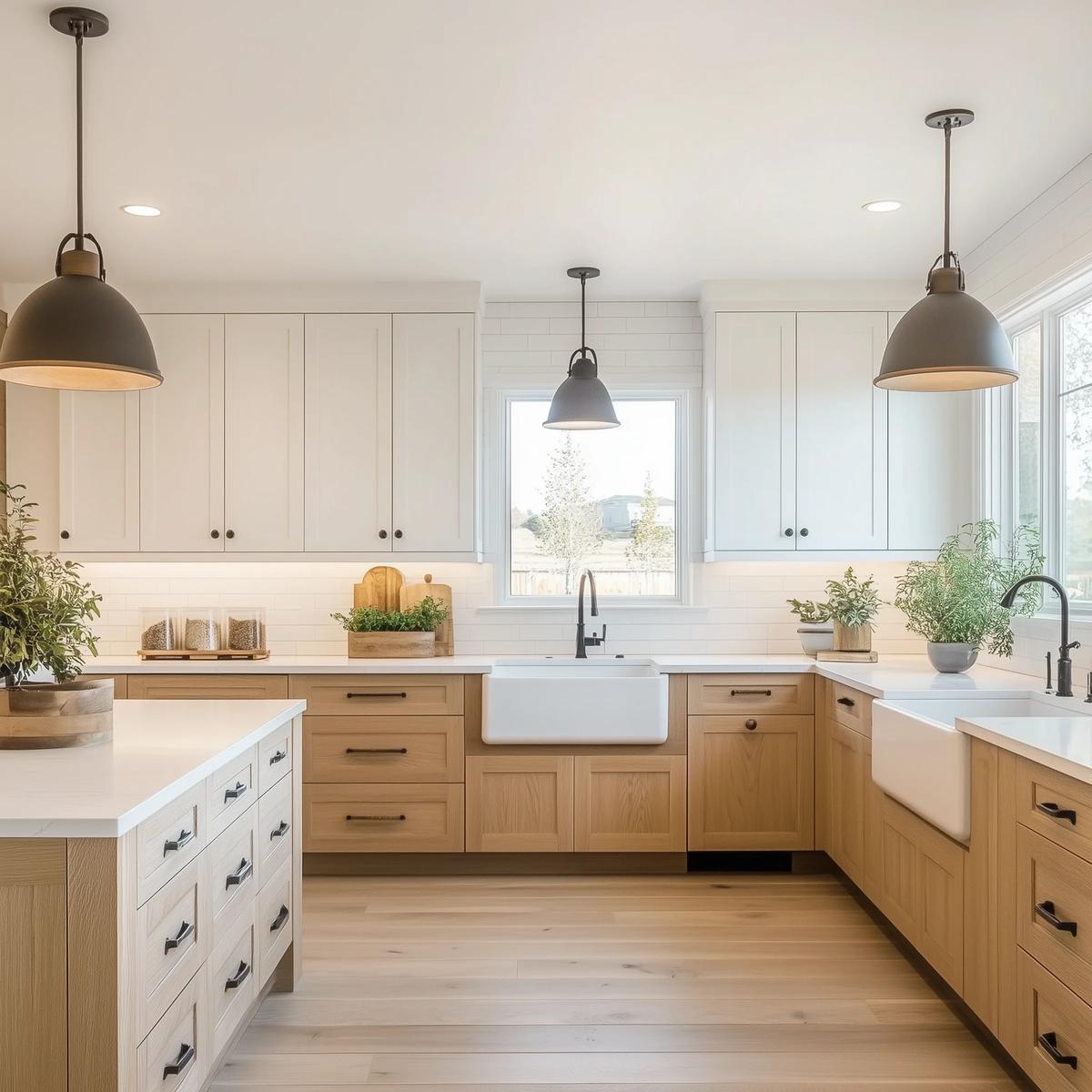
Browse Santa Clara Real Estate
Live counts · refreshed every 15 minutes from MLS
Get the Complete Santa Clara Market Report
Monthly data, neighborhood breakdowns, price trends, and insider analysis delivered to your inbox.
Send Me the Report →Buyers traveling in summer should set up automated alerts and keep their agent authorized to schedule tours quickly. Hot listings don't wait for you to get back from vacation.
Santa Clara Market FAQ
Popular Santa Clara neighborhoods include Old Quad, Pomeroy, Washington-Central, and the areas near Santa Clara University. Each offers different pricing and proximity to downtown, transit, and employment centers.
Santa Clara provides solid entry points for first-time buyers through its condo and townhome inventory, particularly near the Great America area and along El Camino Real. The city's central location and employer access make it a practical choice for building equity.
Santa Clara features a mix of single-family homes, condos, townhomes, and newer high-density developments near Levi's Stadium. The older neighborhoods near Santa Clara University have charming post-war homes, while newer communities offer modern amenities.
Still have questions about Santa Clara?
I've helped hundreds of families buy and sell in Santa Clara. Happy to share what I'm seeing in your specific neighborhood.
What's Your Santa Clara Home Worth Right Now?
Get a confidential home valuation based on current MLS data and neighborhood-specific factors.
Get My Home Value →Schools in Santa Clara
Aegis School Excellence Index · 2024-25 performance data
Serving districts: Santa Clara Unified SD (K-12). School district boundaries can change; please verify current enrollment boundaries and program offerings directly with the school district.
Looking for homes in Santa Clara?
Get personalized listing alerts delivered to your inbox. Be the first to know about new homes that match your criteria.
Get Santa Clara Listing Alerts →Community Resources
Santa Clara Essential Services
Official Sources
Buying or Selling in Santa Clara?
Get the data, the strategy, and the introductions before the rest of the market sees them.
Schedule a Conversation →
Timothy Alston
Broker · DRE# 01328224 · Aegis Luxury Real Estate
Copyright © 2026 MLSListings Inc. All rights reserved.
The data relating to real estate for sale on this display comes in part from the Internet Data Exchange program of the MLSListings™ MLS system. Real estate listings held by brokerage firms other than Aegis Luxury Real Estate are marked with the Internet Data Exchange icon and detailed information about them includes the names of the listing brokers and listing agents.
Based on information from the MLSListings MLS as of July 2026. All data, including all measurements and calculations of area, is obtained from various sources and has not been, and will not be, verified by broker or MLS. All information should be independently reviewed and verified for accuracy.
These statistics are generated using information from the MLSListings Inc. multiple listing service, but have not been verified and are not guaranteed. MLSListings Inc. disclaims any responsibility for the accuracy and reliability of these statistics. Full Santa Clara market data →
Data updated every 15 minutes. Visit www.MLSListings.com for more information.
Aegis Luxury Real Estate · 10080 N. Wolfe Rd Ste SW3-200, Cupertino CA 95014 · DRE# 01328224
This article is for informational purposes only and does not constitute financial, legal, or tax advice. Equal Housing Opportunity.